
For new business owners planning a local small business startup, the opportunity is personal: entrepreneurship in local markets can fill real gaps, create gathering spaces, and strengthen the community impact of small businesses in ways big brands can’t copy. The hard part is that the same closeness that makes local work meaningful also raises the stakes. Neighbors notice everything, word travels fast, and the challenges of launching a business hit early and publicly. Many local business owners wrestle with how to stand out without feeling salesy, how to earn trust quickly, and how to build something that fits the block instead of disrupting it. Done well, a local business becomes a name people remember.
When you’re building something that serves the neighborhood, people will look for quick signals they can trust, starting with your name, vibe, and visuals. A well-designed logo is one of the simplest marketing moves you can make early on: it creates a strong first impression, builds brand awareness, and helps separate your business from the competition. When someone spots your sign, flyer, menu, or social post, a recognizable logo makes it easier to remember you, and easier to recommend you.
If your startup budget is tight, you don’t have to pay for logo design services right away. You can use an online logo maker to create an appealing, creative logo yourself. Start by choosing a style and an icon that match the feel of your business, then add the text you’ll need. From there, you can browse an assortment of logo options and fine-tune the look by adjusting fonts and colors until it feels like “you.” With your logo and visuals set, you’ll be ready to move from brand basics into the practical launch steps that get you to opening day.
Choosing the right commercial real estate is one of the most important decisions a business owner can make, as the location, size, and layout of a property can directly affect customer traffic, employee productivity, and long-term growth. Whether you're opening a retail storefront, leasing office space, or expanding into a larger facility, it's important to consider factors such as accessibility, visibility, zoning requirements, and future scalability. Taking the time to evaluate your business needs and compare multiple options can help ensure you secure a space that supports both your day-to-day operations and your long-term goals.
With your logo and visuals ready, it’s time to set the foundation. This simple path helps you confirm people actually want what you’re offering, get set up legally, and walk into launch day feeling prepared.
To keep it all moving: This checklist turns your foundation work into simple actions you can repeat, share, and measure. Use it to stay focused while you build trust, get found locally, and earn steady word-of-mouth.
✔ Confirm demand with 10 neighbor conversations and one small paid test
✔ Compare 5 local competitors and write a clear one-sentence promise
✔ File registrations, secure permits, and open a separate business bank account
✔ Set a booking, payment, and follow-up flow you can run in 10 minutes
✔ Create a simple referral ask and practice saying it naturally
✔ Join two community groups and introduce your business once a week
✔ Post three local updates: offer, story, and customer win
Check off a few today, and you will feel momentum fast.
Launching is exciting, but the hard part is staying visible when the first rush fades and doubts creep in. The steadier path is the mindset of showing up consistently, building community connections, and making decisions that support local business sustainability instead of quick wins. Do that, and the benefits of local entrepreneurship start to stack: stronger word-of-mouth, repeat customers, and clearer momentum toward long-term business growth. Grow where you’re known, and growth follows.
Reno has steadily grown into a technological and production hub, attracting many notable businesses to the area. Part of this upward tick in activity lends itself to Nevada’s benefits for corporate and small businesses. Additionally, the influx of residents in Reno and the surrounding communities has significantly increased the demand for production and service-related industries.
Some have considered Reno to be a mini Silicon Valley as the business landscape swells. Here’s why the region should be on your list if you’re looking for “commercial real estate near me”:
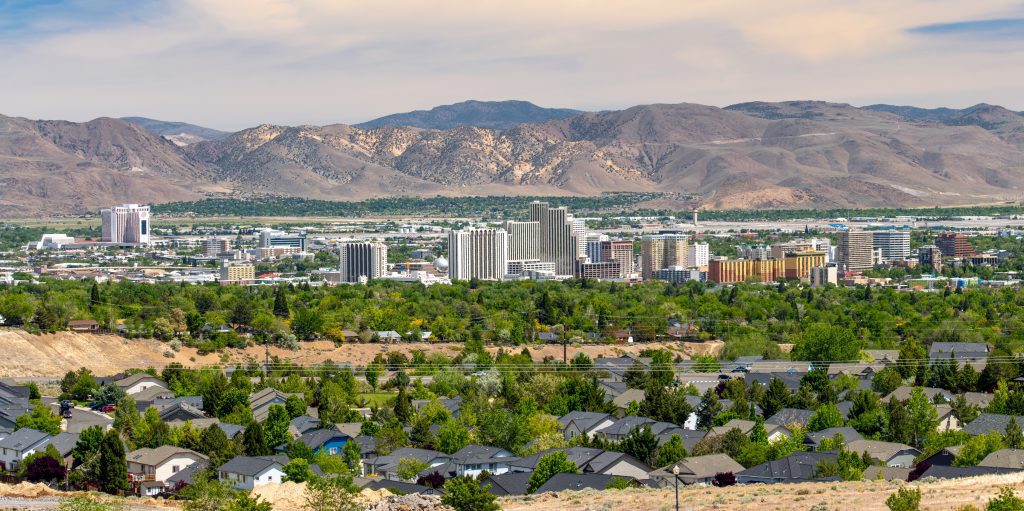
The 2022 Milken Report ranked the greater Reno area in the top 20 for best-performing large cities. That puts it in the 2nd Tier among all large metropolitan areas based on a variety of factors, including job growth, wage growth, high-tech GDP, and housing affordability. Several companies who have already relocated to Reno have seen significant decreases in operating costs and employee cost of living. The most notable benefits include:
Not to mention, Reno is geographically situated as a gateway to western transport, making it all the more appealing for those acquiring commercial property for sale. Reno NV businesses have access to 60 Million customers by 1-Day Truck Service, making it a smart investment for both new and expanding companies that ship goods nationwide.
Business aside, Reno offers amazing natural beauty, outdoor enthusiast destinations a-plenty, and affordable housing for you and your workforce. This city has it all, and individuals will enjoy life outside of work thanks to Reno’s healthy balance of activities and cost of living.
The majority of businesses relocating to the Reno area are from the nearby San Francisco Bay Area. On average, Reno is 65.3% cheaper than San Francisco¹. Even after adjusting for income levels and cost of living, your dollar goes further in the Biggest Little City. Here is a cost comparison between both metropolitan areas:
| Table 1 | Reno (NV) | Bay Area (CA) |
|---|---|---|
| Office Lease Rates (Class A) | Reno: $30-39/SF/YR | San Jose: $60-66/SF/YR San Fran: $78-84/SF/YR |
| Average Hourly Earnings | $43.09 | $64.97 |
| Workers Compensation | Average Cost (per $100 payroll): $1.18 Payroll Cap: $36,000 |
Average Cost (per $100 payroll): $2.87 Payroll Cap: NA |
| Utility (elec.) Rates for Medium Sized Office | $0.78/kWh | $0.157/kWh |
| Right to Work State | Yes | No |
Table 1: EDAWN, "Why Reno, Business Cost Comparisons"
Evan Meyer, licensed Kidder Mathews Broker, currently has several commercial properties for sale in the Biggest Little City, along with attractive office space for rent. Reno NV offers numerous benefits that are competitive with other large metropolitan areas, so if you’re considering taking the plunge and calling Reno your new business hub, check out the listings below.
If you are considering relocating to Northern Nevada, a commercial real estate broker can help navigate the process. Evan Meyer is an experienced and qualified broker who strives to help his clients find their ideal space. His main goal is to help businesses reach optimal success, which starts with their location. He works with each of his clients individually to get the best deal possible on their new space.
When a business is in the market to lease a new location, it will have a list of specific requirements. After all, a business's space is the domain that represents a company's culture, ideas, and reputation. Unfortunately, finding the ideal space in the desired location at the right price can be a challenge. A commercial real estate broker can help through the service of tenant representation.
Tenant representation refers to a commercial broker, a tenant representative, or a tenant rep who exclusively represents a business's interests when leasing a commercial space. A tenant rep is a licensed professional specializing in various properties and helps identify the ideal location while negotiating the best price.
Proper tenant representation is essential for business owners as it can save valuable time and resources. In addition, commercial real estate brokers have the market knowledge to show properties most tenants do not have access to.
Additionally, working with a professional broker to help negotiate a lease provides leverage with the landlord. A tenant representative will also lower your risk of making treacherous real estate decisions by helping guide you through analytical, logical decisions.
Consider the following when searching for commercial real estate for your business:
Timing - One of the first considerations when looking for space will undoubtedly be focused on timing. This encompasses when the lease will commence and for how long. Often, the longer the term of a lease, the more concessions. It is also essential to consider the timing of any needed improvements. For example, is the property turn-key, or will the property require modification? A commercial real estate broker can easily help with planning and negotiating the terms of your contract to accommodate these needs.
Size -The size of the space is not only a consideration in the initial stages of searching for a property but also when planning what kind of space your company needs for the future. A commercial real estate agent has experience helping businesses plan for the size of space needed now and for the future.
Specialized Needs - Some businesses have unique requirements, including high fiber-optic internet, sprinkler systems, or need to be in a stand-alone building. Often time specialized needs will narrow down the options to one or two buildings. Consider these needs when evaluating options.
Location - Aside from budget, location is a decision of the utmost importance. Identify what part of town is ideal for your business. Do you prefer to be in the suburbs, downtown, or a rural area?
It is a commercial broker's responsibility to compile all these elements and help you find the ideal property. The perfect space does not always exist or may be hard to find, but Evan Meyer can help you identify a building that meets all your needs.
Contact Commercial Real Estate Broker Evan Meyer
Evan Meyer is an experienced commercial broker that can help!
Determining building classifications is more of an art than a science. There is no formal or international standard. Building classifications change from city to city. Here’s how Reno defines its classes:
Class A buildings are built to impress. These buildings are found in highly desirable areas, constructed with high-quality building materials, and require little if any, deferred maintenance. They typically command the highest rates in the market. Usually, the easiest way to determine a Class A building is by the exterior appearance.
Class B buildings are less impressive than Class A buildings. They are well-maintained and fully functional structures with adequate mechanical, security, and electrical systems. Class B buildings generate average rental rates.
Class C buildings are typically older, outdated, and suffer from deferred maintenance. This is the lowest classification on the spectrum, and these buildings are generally in less desirable locations. They usually need extensive repairs, are structurally obsolete and lack proper technology. Class C buildings get the lowest rental rates and may be more challenging to lease.
Whether you are interested in Class A, B, or C building, Evan Meyer can help. Reach out today!
GET IN TOUCH TODAY