
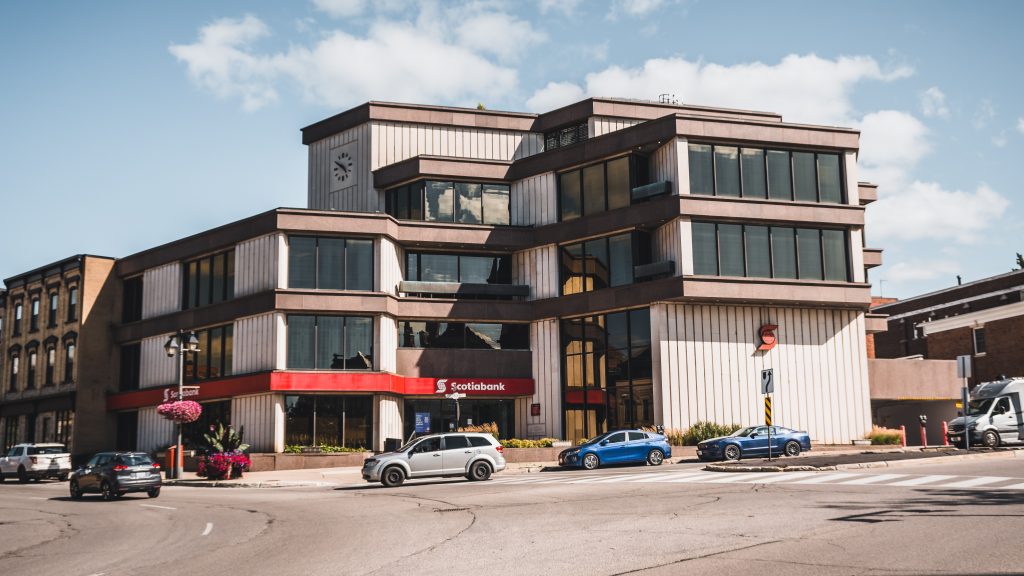
It is a great day when you realize that your business has succeeded and grown to such an extent that you need to lease a new building to bring your company to the next level. However, you should know that there is more to the process than just finding a spot and calling it your own, and we are here to help. As a Reno commercial real estate agent, Evan Meyer has helped many entrepreneurs find their new buildings and help them to navigate the process, so we have some tips for you to consider if you are thinking about leasing your own property.
The first thing that you need to know before starting the process is that you have numerous options to consider, and it isn’t quite as straightforward as it may seem. For instance, there are many different leasing types that you may encounter. A full-service lease is usually the easiest, and it means that you pay the landlord for just about everything, including the taxes, and they take care of the rest. If you go for a triple-net lease, then you still pay rent and also the property expenses, so it can be a bit more costly. You may also encounter a modified gross lease, which is a combination of the two. Do your research or get in contact with a Reno commercial real estate agent before moving forward.
Before you sign on the dotted line, you will likely need to have several conversations with the landlord as you ask about every minute detail. Some of the more important questions that you should ask include how many years you have on the lease, if the rent will increase each year or if you have a locked rate, and what other services are included in the lease, such as repairs and janitorial work.
There are other questions that may not be directly tied to the lease, but you will still want to ask. For instance, you should ask how safe the neighborhood is during the day and at night. If they hesitate before giving you an answer then you may want to continue your search. You should also inquire about parking. Is it easy enough for cars to park? Knowing the answer could determine how many customers you could see each day. Think about everything that helps your business thrive, and ask questions to ensure that this is the right space.
Since obtaining a commercial lease is a major deal, your potential landlord may ask you for extensive documentation about your business and your finances, so you should be prepared to provide what they need. For instance, you will need to prove that you can afford the cost of the building and the monthly payments. To prove that, you’ll want to show your tax statements and current bank statements that show how much money you make and what is left over after your other expenses.
Because this is such a huge endeavor, most landlords will need you to make a major financial commitment. In many cases, you may be asked to show that you have at least six months worth of rent money saved up. If you don’t, the deal may be off before it starts.
If you look at your finances and determine that you barely have any cash left over after paying rent each month, then you may need to reconsider, as there are many miscellaneous expenses that you may also need to pay. For instance, you may be on the hook to pay a security deposit, you might be responsible for maintenance, and there may be costly late fees if you can’t pay on time. Keep in mind that everything is often negotiable, including the cost of rent, so work with the landlord to get the best deal. If you need help, then seek professional representation. A Reno commercial real estate agent can help.
As you can see, there is a lot that goes into leasing a property, but by understanding the terms, carefully reviewing your finances, and asking important questions, you can make the best decision for your business. If you would like to learn more about the services offered by Evan Meyer, then contact us at Evan.Meyer@Kidder.com.
While in the process of seeking commercial property leases, it’s common to be unfamiliar with the language or phrases being used. Below are the fourteen common real estate definitions.
Abated Rent
Abated rent, also called rent abatement or free rent is a provision within a property lease agreement that authorizes a tenant to defer rent payments. Abated rent is typically used as a concession to incentivize prospective tenants.
Acceptance of Premises
An acceptance of premises acknowledges the tenant’s confirmation that they accept the property “As-Is” and will take over possession of the premises.
Assignment
A real estate assignment refers to a situation in which the original buyer or tenant (called the assignor) transfers the legal rights and obligations of the purchase agreement or lease to another party (called the assignee).
Building Classifications
Building classifications are the determining factors that define and categorize commercial buildings or structures. Such classifications are based on the property’s usage, location, amenities, and more to denote the condition of the structure for building and municipality authorities. Commercial building classifications include Class A, Class B, and Class C buildings.
CAM (Common Area Maintenance)
Common area maintenance, or CAM, fees refer to the costs associated with operating a commercial building that are billed by the landlord to the tenant. Such expenses include maintaining shared areas such as hallways, stairways, elevators, lobbies, public restrooms, and parking lots. CAM expenses are most common in triple net leases.
Cap Rate
Cap rate, which is short for capitalization rate, is used as a valuation method for real estate investments. Cap rate is calculated by dividing a property’s net operating income (NOI) by the price. The ratio is expressed as a percentage to determine a real estate investor’s potential return on their investment.
Central Business District
The central business district refers to a city or town’s main business area where most commercial property is located.
Coworking
Coworking in real estate refers to a shared workspace that is used by employees from various entities. Coworking usually occurs in large buildings that allow multiple factions to work closely together.
CPI (Consumer Price Index)
The Consumer Price Index, or CPI, is an economic term that measures the average change in prices paid by consumers over a specified amount of time. When it comes to commercial real estate, the CPI is often used as a rent escalator. For example, if a tenant’s monthly rent is set at $1,000 and the annual CPI rate is 5%, the new rent price will rise to $1,050 per month.
Expansion Option
An expansion option is a clause that is negotiated within the lease that gives the tenant preferential rights to expand within the building in which they are renting.
Flex Space
A flex space, sometimes called flexible space, is a hybrid commercial property that includes an office and warehouse space. These spaces are under 5,000 square feet and typically include a warehouse door.
Full-Service Lease
A full-service lease refers to the all-inclusive rental rate included in some commercial leases. This means that the monthly rental rate will also include all operating expenses and building fees such as utilities, property taxes, insurance, and common area maintenance (CAM).
Landlord
A landlord is a person or entity that owns commercial property that is rented or leased to another person or entity.
Landlord Representation
Landlord representation refers to situations when a commercial real estate broker represents a landlord or owner. These real estate brokers help attract the right tenants to a landlord’s property and thereby improves the building’s investment value.
CONTACT COMMERCIAL REAL ESTATE BROKER
Evan Meyer is an experienced commercial broker that can assist with any real estate transaction! See how he can help you today.
When a business is in the market to lease a new location, it will have a list of specific requirements. After all, a business's space is the domain that represents a company's culture, ideas, and reputation. Unfortunately, finding the ideal space in the desired location at the right price can be a challenge. A commercial real estate broker can help through the service of tenant representation.
Tenant representation refers to a commercial broker, a tenant representative, or a tenant rep who exclusively represents a business's interests when leasing a commercial space. A tenant rep is a licensed professional specializing in various properties and helps identify the ideal location while negotiating the best price.
Proper tenant representation is essential for business owners as it can save valuable time and resources. In addition, commercial real estate brokers have the market knowledge to show properties most tenants do not have access to.
Additionally, working with a professional broker to help negotiate a lease provides leverage with the landlord. A tenant representative will also lower your risk of making treacherous real estate decisions by helping guide you through analytical, logical decisions.
Consider the following when searching for commercial real estate for your business:
Timing - One of the first considerations when looking for space will undoubtedly be focused on timing. This encompasses when the lease will commence and for how long. Often, the longer the term of a lease, the more concessions. It is also essential to consider the timing of any needed improvements. For example, is the property turn-key, or will the property require modification? A commercial real estate broker can easily help with planning and negotiating the terms of your contract to accommodate these needs.
Size -The size of the space is not only a consideration in the initial stages of searching for a property but also when planning what kind of space your company needs for the future. A commercial real estate agent has experience helping businesses plan for the size of space needed now and for the future.
Specialized Needs - Some businesses have unique requirements, including high fiber-optic internet, sprinkler systems, or need to be in a stand-alone building. Often time specialized needs will narrow down the options to one or two buildings. Consider these needs when evaluating options.
Location - Aside from budget, location is a decision of the utmost importance. Identify what part of town is ideal for your business. Do you prefer to be in the suburbs, downtown, or a rural area?
It is a commercial broker's responsibility to compile all these elements and help you find the ideal property. The perfect space does not always exist or may be hard to find, but Evan Meyer can help you identify a building that meets all your needs.
Contact Commercial Real Estate Broker Evan Meyer
Evan Meyer is an experienced commercial broker that can help!
Hiring a commercial real estate broker has several benefits. As licensed professionals specializing in various property types, commercial brokers can find the ideal location for your business. Taking into consideration all of your business needs, a commercial broker will also help negotiate the deal on your behalf, saving you valuable time and resources.
The following are five benefits of working with a commercial broker:
1. Market Knowledge: Commercial brokers have access to off-market opportunities. Some buildings are not listed on the market for the public to see, which can limit your options. With a commercial broker, there are more properties available to you.
2. Negotiations: It pays to have someone on your side during negotiations. Having a professional broker negotiating your contract gives you leverage with the landlord or seller. With their experience and knowledge in the industry, commercial brokers can ensure that you get the best rate possible for your space.
3. Lower Your Risk: There is always risk involved with regards to Real Estate. A trained and experienced commercial broker can recognize risky real estate transactions and guide you towards a better solution.
4. Make Analytical Decisions: Browsing for commercial properties can be an exciting and emotional time, which can hinder the decision-making process. It’s common for eager tenants to say yes to spaces that aren’t right for them based on a whim. However, a commercial broker can help put emotions aside, enabling a logical decision.
5. Let's You Focus on Business: A commercial broker takes over the responsibility and stress of finding a new working space so that you can focus on what truly matters, your business.
Contact Commercial Real Estate Broker Evan Meyer
Evan Meyer is an experienced commercial broker that can help!
WORK WITH A COMMERCIAL REAL ESTATE RENO AGENT
Each commercial space in Reno, NV is unique. Properties have different rules and regulations, as well as varying layouts and tenants. Though this is an exciting process, you must stay pragmatic with your decision-making. Start by getting as much information about the property as possible. The following list will help determine whether or not you will be satisfied in a space long-term:
1. Additional Expenses: Other than rent, what expenses are tenants expected to pay? The most common additional expenses owed by renters include NNN fees, utilities, janitorial services, HVAC maintenance, and more.
2. Mechanical Systems: In the event of a plumbing, HVAC or electrical failure, who will pay for the repairs?
3. Parking: How is parking divided up? Are there dedicated or shared spaces? Confirm that there will be adequate parking for your employees and customers.
4. Telecommunications: What telecommunication companies support the building? Is the building wired for fiber optics?
5. Building Management: How is the building managed? Is there a professional property management company or is it done directly by the owners? Also, if building issues come up, what is the process for remedying them?
6. Tenant Improvements (TIs): Is there a TI allowance? Does the landlord have a contractor they prefer to work with? If tenant improvements are needed, what restrictions exist?
7. Building Hours: What are the building’s open hours? Sometimes, tenants do not have 24/7 access to their space. Furthermore, large office buildings often shut down HVAC systems during off-hours and assess additional fees to use them during these times.
8. Other Tenants: Who are the other tenants in the building? Do any non-compete clauses exist?
Contact Commercial Real Estate Broker Evan Meyer
If you need help finding the perfect space for your business to purchase or lease, contact Evan Meyer today.