
Reno has steadily grown into a technological and production hub, attracting many notable businesses to the area. Part of this upward tick in activity lends itself to Nevada’s benefits for corporate and small businesses. Additionally, the influx of residents in Reno and the surrounding communities has significantly increased the demand for production and service-related industries.
Some have considered Reno to be a mini Silicon Valley as the business landscape swells. Here’s why the region should be on your list if you’re looking for “commercial real estate near me”:
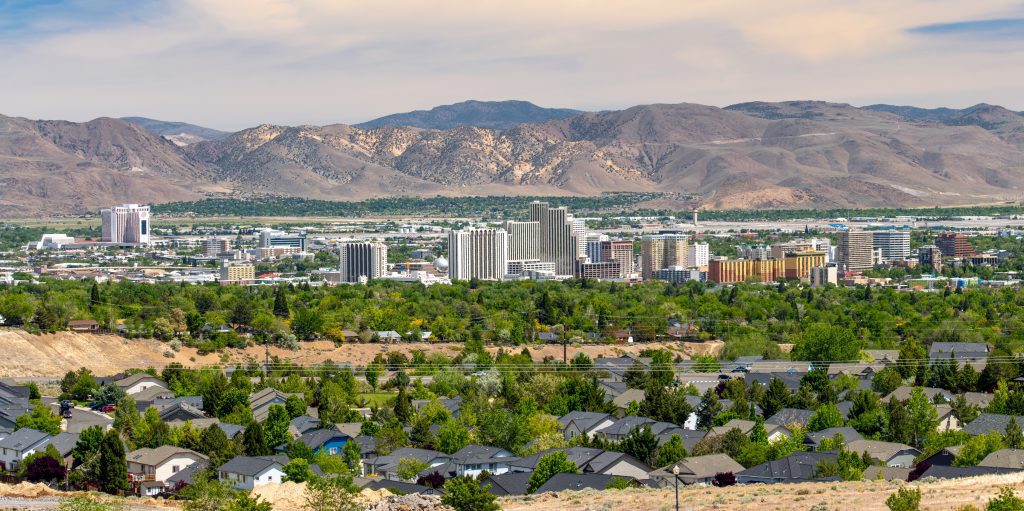
The 2022 Milken Report ranked the greater Reno area in the top 20 for best-performing large cities. That puts it in the 2nd Tier among all large metropolitan areas based on a variety of factors, including job growth, wage growth, high-tech GDP, and housing affordability. Several companies who have already relocated to Reno have seen significant decreases in operating costs and employee cost of living. The most notable benefits include:
Not to mention, Reno is geographically situated as a gateway to western transport, making it all the more appealing for those acquiring commercial property for sale. Reno NV businesses have access to 60 Million customers by 1-Day Truck Service, making it a smart investment for both new and expanding companies that ship goods nationwide.
Business aside, Reno offers amazing natural beauty, outdoor enthusiast destinations a-plenty, and affordable housing for you and your workforce. This city has it all, and individuals will enjoy life outside of work thanks to Reno’s healthy balance of activities and cost of living.
The majority of businesses relocating to the Reno area are from the nearby San Francisco Bay Area. On average, Reno is 65.3% cheaper than San Francisco¹. Even after adjusting for income levels and cost of living, your dollar goes further in the Biggest Little City. Here is a cost comparison between both metropolitan areas:
| Table 1 | Reno (NV) | Bay Area (CA) |
|---|---|---|
| Office Lease Rates (Class A) | Reno: $30-39/SF/YR | San Jose: $60-66/SF/YR San Fran: $78-84/SF/YR |
| Average Hourly Earnings | $43.09 | $64.97 |
| Workers Compensation | Average Cost (per $100 payroll): $1.18 Payroll Cap: $36,000 |
Average Cost (per $100 payroll): $2.87 Payroll Cap: NA |
| Utility (elec.) Rates for Medium Sized Office | $0.78/kWh | $0.157/kWh |
| Right to Work State | Yes | No |
Table 1: EDAWN, "Why Reno, Business Cost Comparisons"
Evan Meyer, licensed Kidder Mathews Broker, currently has several commercial properties for sale in the Biggest Little City, along with attractive office space for rent. Reno NV offers numerous benefits that are competitive with other large metropolitan areas, so if you’re considering taking the plunge and calling Reno your new business hub, check out the listings below.
If you are considering relocating to Northern Nevada, a commercial real estate broker can help navigate the process. Evan Meyer is an experienced and qualified broker who strives to help his clients find their ideal space. His main goal is to help businesses reach optimal success, which starts with their location. He works with each of his clients individually to get the best deal possible on their new space.
There are four main categories of commercial real estate: office, retail, industrial, and multi-family. Each commercial property type serves a specific purpose and is intended to generate income and value.
Sometimes there is an overlap between commercial real estate types. For example, a dentist may decide to occupy a space within an office building or retail center.

A city’s largest office buildings are typically located within the central business district, commonly referred to as “Downtown.” Suburban offices are usually smaller buildings. Office buildings may be occupied by single or multiple tenants, depending on the size and concept of the property.
Office buildings are commonly ranked by class: A, B, or C. To learn more about these various tiers, check out our blog.
Retail consists of properties that are used by shops and restaurants. There are multiple types of shopping centers, including regional malls, community centers, strip centers, and power centers. The kind of shopping center is defined by its size, concept, type, number of tenants, and trade area.
Single-tenanted buildings are often occupied by big-box centers like Target and Home Depot, while pad sites remain open for businesses such as banks, restaurants, and other stores.
Industrial buildings are typically located in suburban areas and are often close to major transportation routes for convenient and expedited service. These properties vary greatly in size but are generally large open buildings with minimal office space.
Commercial properties are categorized into four groups:
Multi-family includes all types of residential properties except single-family. These properties consist of apartment buildings, condos, townhomes, and corporate housing. They are six categories:
When leasing a space, it is essential to confirm that the zoning is appropriate for the tenant’s use. Just because a building appears ideal doesn’t guarantee that it is legal to operate a specific business at the location. Always reach out to the appropriate municipality to ensure the building is acceptable and adequately zoned.
If you need help finding the right space for your business or are interested in investing in commercial real estate, contact Evan Meyer today.